by Patricia Korzec
"I have found adventure in flying, in world travel, in business, and even close at hand. Adventure is a state of mind... and spirit." - Jackie Cochran
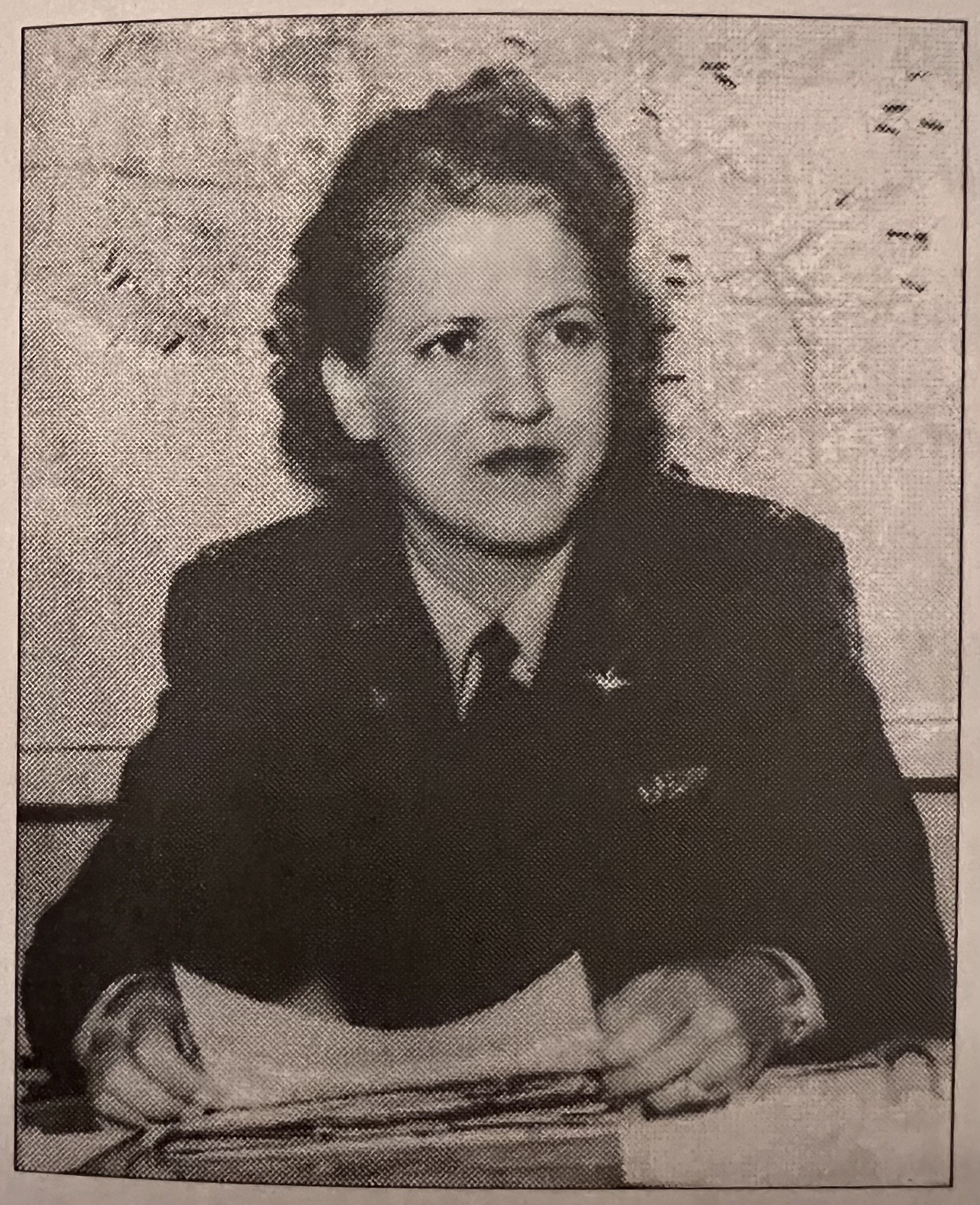
"A Life Imagined" is something we all become engaged in from the time we are young children. We see ourselves as a doctor saving a life, a beautiful ballerina floating across a stage, or maybe even a brainy scientist finding a cure for cancer. Perhaps we will travel the world, or maybe even explore places where no one else has been. Quite often we fall short of these daydreams, but Jackie Cochran did not. She elevated herself from a childhood of poverty to one of wealth and lived a life full of excitement where she broke aviation barriers and became one of the world's most celebrated pilots.
Born Bessie Pittman in Pensacola (other records indicate she was born in DeFuniak Springs) in the Florida Panhandle, she was the youngest of the five children of Mary (Grant) and Ira Pittman, a skilled millwright who moved from town to town setting up and reworking saw mills. While her family was not rich, Cochran's childhood living in small-town Florida was like those in other families of that time and place. Contrary to some accounts, there was always food on the table, and she was not adopted, as she often claimed. At age eight her family moved to Georgia, where she went to work in a cotton mill. When she was 14, she married Robert Cochran, and they had a son Robert Jr. in 1921. Robert, Jr. died in 1925, and their marriage ended in 1927.
After her divorce, Bessie kept the name Cochran and began using Jacqueline or 'Jackie' as her given name in 1931. She trained as a beautician, beginning by sweeping floors and being a shampoo girl in a beauty parlor. With her stunning looks and engaging personality, she pursued this new career which eventually landed her a job at Saks Fifth Ave in New York City. In 1935, she developed a cosmetics firm, Jacqueline Cochran Cosmetics, with the help of Floyd Odlum, a savvy marketer and financier who would have a significant impact on her future. This fledgling company prospered into a multi-million-dollar cosmetics company under her management. She sold her cosmetics firm in 1963 but not before engaging stars such as Marilyn Monroe to promote her lipsticks and "Wings" perfume. Her astute business sense was rewarded by her becoming voted Woman of the Year in Business in 1953 and 1954. Jackie always looked to the skies for inspiration. It seems that even as a child she knew someday she would experience the freedom of flight. In the summer of 1932, Cochran's future husband, Floyd Odlum, introduced her to the idea of flying. She spent three weeks at Roosevelt Field, Long Island, learning to pilot an airplane. Her pilot's license followed and within two years, she obtained her commercial pilot's license which allowed her to fly her own plane along the eastern seaboard to promote her line of cosmetics and establish a chain of beauty shops, a research laboratory in New Jersey, and product outlets in the United States.
She often flew 90,000 miles per year for her business needs.
When she married Floyd Odlum in 1936, her lifestyle changed drastically. It also changed the image of Indio. They built a 732-acre ranch in Indio after they were stranded with a flat tire near the property. When they purchased the land, it cost $100 per acre and, in later years, it was valued at $5,000 per acre. The initial ranch house grew with many additions over the years. Rooms and furnishings were larger than life just like Jackie and Floyd. Indio soon became a stopping point for many notables like General Curtis Le May, John and Nelson Rockefeller, Walt Disney, Amelia Earhart, Gloria Swanson, good friends Bob and Dolores Hope, and Presidents Dwight Eisenhower and Lyndon Johnson. Eisenhower maintained his winter office at the ranch, and it was there that he wrote his memoirs.

During these years Jackie began to expand her fascination with aviation. In 1934, when she entered her first air race, she became best friends with aviatrix Amelia Earhart. This was to be a lifelong friendship. In 1935, she entered her first Bendix Air Race and within two years, Jackie took first place in their women's division. She became the first woman to make a blind landing. She was awarded her first of fifteen Clifford Burke Harmon International Trophies of the International League of Aviators as the outstanding woman flyer in the world. In 1938, she took first place in the Bendix Transcontinental and received the General Willie E. Mitchell Memorial Award as the person making the greatest contribution to aviation that year. This list grows even longer as her career developed.
In 1939, as newspapers were filled with accounts of Hitler's Nazi troops marching across Europe, Jacqueline Cochran began to envision the role of women as pilots in the looming war. She met with Eleanor Roosevelt, and, at the suggestion of the President's wife, she conferred with General Hap Arnold regarding her ideas for using women pilots. He flatly rejected her plans. General Arnold seemed to have forgotten that meeting when he called her two years later to ask her to go to England to learn more about the women pilots of the Royal Air Force. At the subsequent request of General Arnold and Britain's Chief Air Mission Commander, she organized a group of twenty-five American women pilots to fly for Great Britain.
By the Spring of 1942 (as predicted by Jackie), the U.S. military was experiencing a severe shortage of male pilots. General Hap Arnold had Cochran return to the United States as Director of Women's Flying Training where she successfully trained women pilots to fly America's military aircraft into operation. The experimental flying training program was successful, and in July 1943, Cochran was appointed to the General Staff of the U.S. Army Air Forces to manage the Women Air Force Service Pilots (WASP) program at 120 air bases.
Unfortunately, on December 20, 1944, the WASP program was discontinued. From 1941 to 1943 Jacqueline Cochran was the President of The Ninety-Nines, an organization of women aviators founded in 1929. In 1945, Jacqueline Cochran received the U.S. Distinguished Service Medal, she traveled to the Far East to witness General Yamashita's surrender in the Philippines, and she was the first U.S. woman to enter Japan following WWII.
After the war, Jacqueline Cochran continued to participate in air races and to establish new transcontinental and international records. In 1953, she became the first woman to exceed the sound barrier, a feat which she accomplished flying over Rogers Dry Lake, California, in a Royal Canadian Air Force F-86 Sabre jet. While moving from subsonic to supersonic speed, Cochran averaged 652 mph! In 1971, Jacqueline Cochran was enshrined in the Aviation Hall of Fame in Dayton, Ohio; the first woman to be so honored.
During her lifetime, Cochran was never honored by the city where she lived for 40 years. It was Connie Cowan, curator of the Coachella Valley History Museum, and Cochran's friend and fellow pilot, Maggie Miller, 80, who decided Cochran deserved an honor. They focused on Desert Resorts Regional Airport in Thermal since Cochran often used the airport as she set out to break flight records. In 2004, the Riverside County Board of Supervisors voted to rename the airport the Jacqueline Cochran Regional Airport.
Written in 1954 with her husband Floyd B. Odlum, Jacqueline's autobiography, The Stars at Noon, tells her story in her own words. Many subsequent books and articles have been written about her accomplishments. On August 9, 1980, Jacqueline Cochran died at her home in Indio. She is buried next to her husband in Coachella Valley Public Cemetery.
Jacqueline Cochran went higher and faster into the frontiers of aviation than any woman before her, breaking through the glass ceiling and the sound barrier. That is the story of her whole life. She imagined it from childhood and lived it thoroughly. She truly was an original - a woman behaving badly.... for good.
The Periscope, a series available on Amazon:
The Periscope includes a series of engaging publications that detail the rich history of the Coachella Valley. From life as a pioneer, the growth of the date industry, all the way to the Salton Sea saga, and much more, the stories bring to life the desert region of Southern California. Written under the umbrella of the Coachella Valley Historical Society (dba Coachella Valley History Museum), books in the series tell the stories of the innovators who helped to make the vibrant region what it is today.
ABOUT THE AUTHORS
Dr. Priscilla Porter is the Co-Director of the Porter History-Social Science Resource Center at the Palm Desert Campus of California State University San Bernardino and a volunteer at the Coachella Valley History Museum. A former elementary school teacher, she is the author of many popular curriculum guides for teachers.
Professional gratitude is extended to the contributing authors: Patricia Korzec, Renee Brown, Diana P. Kitagawa, Rod Hendry, Julia Sizek, and Patricia Laflin. Credit is extended to Eduardo Contreras for the cover design.
This is the first book in The Periscope series from the Coachella Valley Historical Society (dba Coachella Valley History Museum). Additional books in the series will be available SOON. To hear about the latest books, sign up for the exclusive New Release Mailing List by sending an email to prisporter@aol.com. You’ll be glad you did!
Requesting Your Review – Reviews are very important to authors. If you’ve enjoyed this book, please write a review of it on www.Amazon.com