The Adobe Brick Exhibit at the Coachella Valley History Museum preserves an important piece of the region’s early building traditions and cultural heritage.
Your donation supports the restoration and preservation of the Adobe Brick Demonstration Exhibit, an important educational landmark, ensuring future generations can experience the Coachella Valley’s early adobe-building traditions and learn from the region’s rich cultural history.
Donate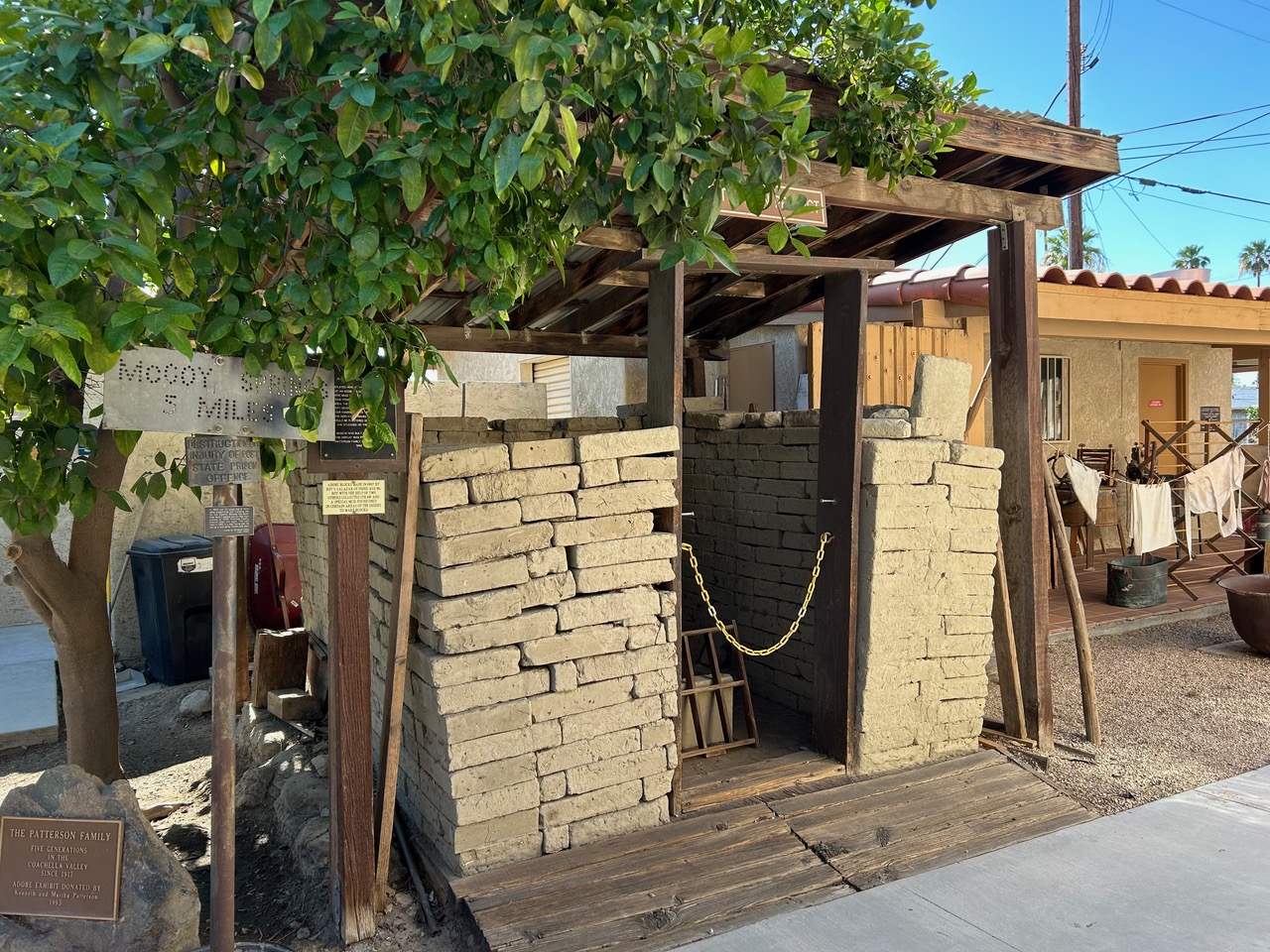
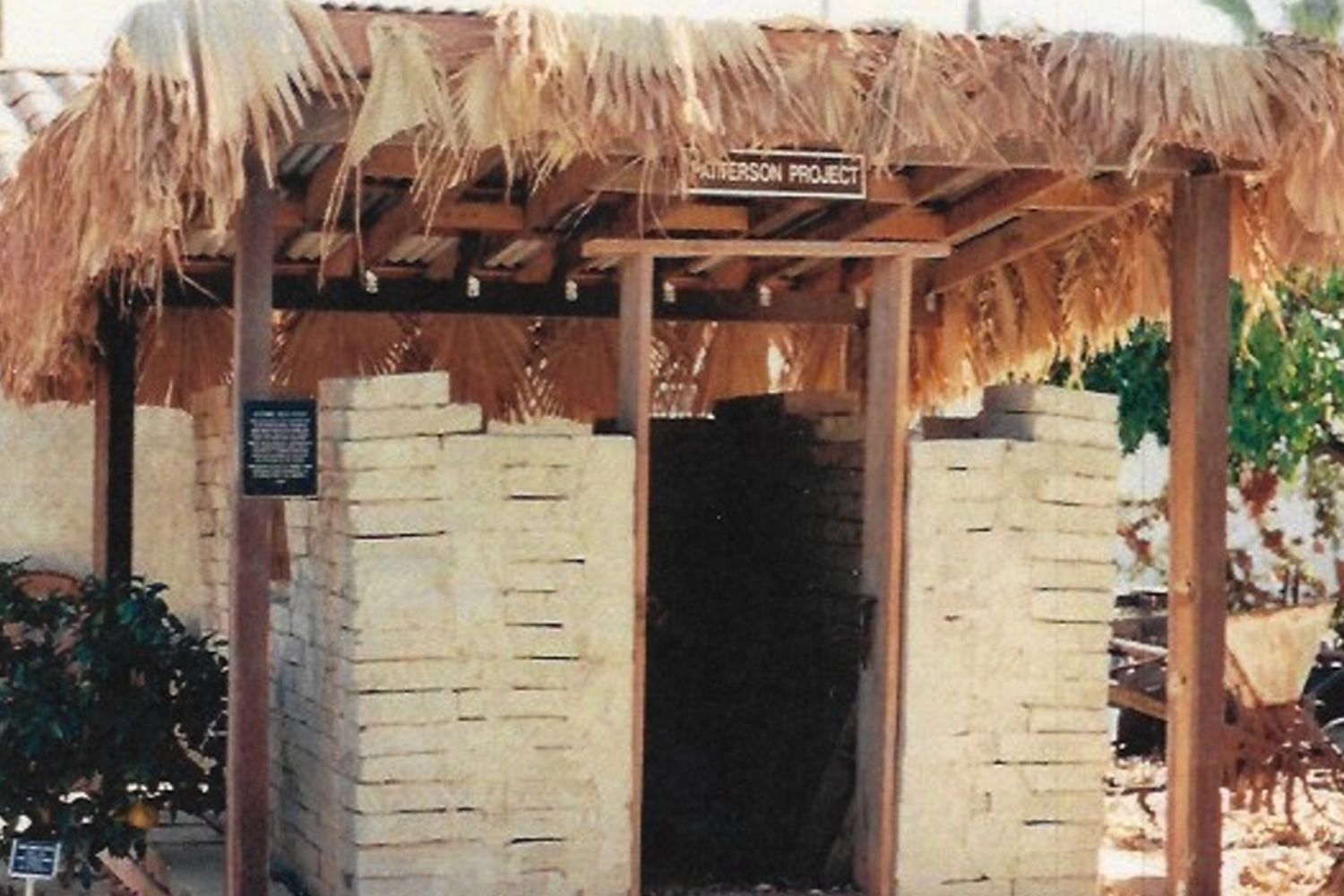
Originally constructed in 1992 under the guidance of longtime Indio resident Roy Salazar, the exhibit demonstrates the traditional adobe brick-making methods once widely used throughout the Coachella Valley.
Today, the exhibit serves as both an educational experience and a tribute to the generations of workers, families, and craftspeople who helped shape the desert community. Through restoration and preservation efforts, the museum continues to honor these traditions while ensuring future generations can learn about the history, craftsmanship, and resilience behind adobe construction in the Valley.
The Adobe Demonstration Exhibit showcases the traditional methods used to create adobe bricks by hand. Native clay soil was mixed with water and straw to create a thick mud mixture, which was then packed into wooden molds and left to dry naturally in the desert sun. Once cured, the bricks were stacked and bonded together using additional adobe mortar, creating strong walls capable of lasting for generations. These same techniques were widely used across the Southwest and helped build homes, schools, ranch buildings, and community structures throughout the early twentieth century.
.png)

“It is important to restore the adobe so that young students understand that people living in the desert before electricity and air conditioning had to be creative problem-solvers. They built homes using natural materials found around them, from clay soil, straw, sand, and water. These adobe-style homes provided natural insulation, helping keep families cool long before air conditioners or even swamp coolers existed. It is important for students to understand how people used local resources and ingenuity to adapt to their environment. It also makes it possible to point out the amount of shells found on our desert floor.”

The restoration of the Adobe Demonstration Exhibit helps preserve a disappearing craft and honors the stories of the people who built and shaped the Coachella Valley. The exhibit provides museum visitors with a hands-on connection to the region’s agricultural roots, construction traditions, and multicultural history.
By supporting preservation efforts, donors help protect an important educational resource that allows future generations to experience the craftsmanship, ingenuity, and resilience of the Valley’s early communities firsthand.


Roy Salazar (1911–2016) was a longtime Indio resident and one of the Coachella Valley’s most respected links to its early agricultural and adobe-building traditions. Born in Ignacio, Colorado, he moved to Indio in 1934, where he spent more than eight decades working across many of the trades that helped shape the growing desert community, including agriculture, construction, trucking, delivery, and local service industries.
In 1936, he married Charlotte Trujillo of Sonora, Mexico, and together they raised their family in Indio, remaining deeply connected to the land and people of the Coachella Valley. Over the years, Roy developed a broad, hands-on knowledge of traditional building practices and desert living, preserving skills that were becoming increasingly rare as the region modernized.In 1992, at the age of 80, Roy Salazar played a key role in the creation of the Adobe Demonstration Exhibit at the Coachella Valley History Museum. Working with native materials sourced from local ranch lands, he helped guide the construction of hand-formed adobe bricks using traditional methods passed down through generations.
His dedication to preserving these techniques ensured that an important part of the Valley’s cultural and architectural history would not be lost. Today, Roy Salazar is remembered for his craftsmanship, his community spirit, and his lasting contribution to the preservation of Coachella Valley heritage.