One of the things that continues to amaze me about the Coachella Valley History Museum is how much innovation shows up in everyday life. Not just in big moments or famous names—but in small businesses, simple ideas, and practical solutions to real desert problems.
In 1926, Indio was already dealing with extreme heat. There was no air conditioning. Refrigerators were not common in homes. Keeping food cold—especially dairy—was a daily challenge. And yet, people still wanted comfort, nourishment, and even something sweet to enjoy on a hot day.
That’s where a small business called FROZMILK comes in.
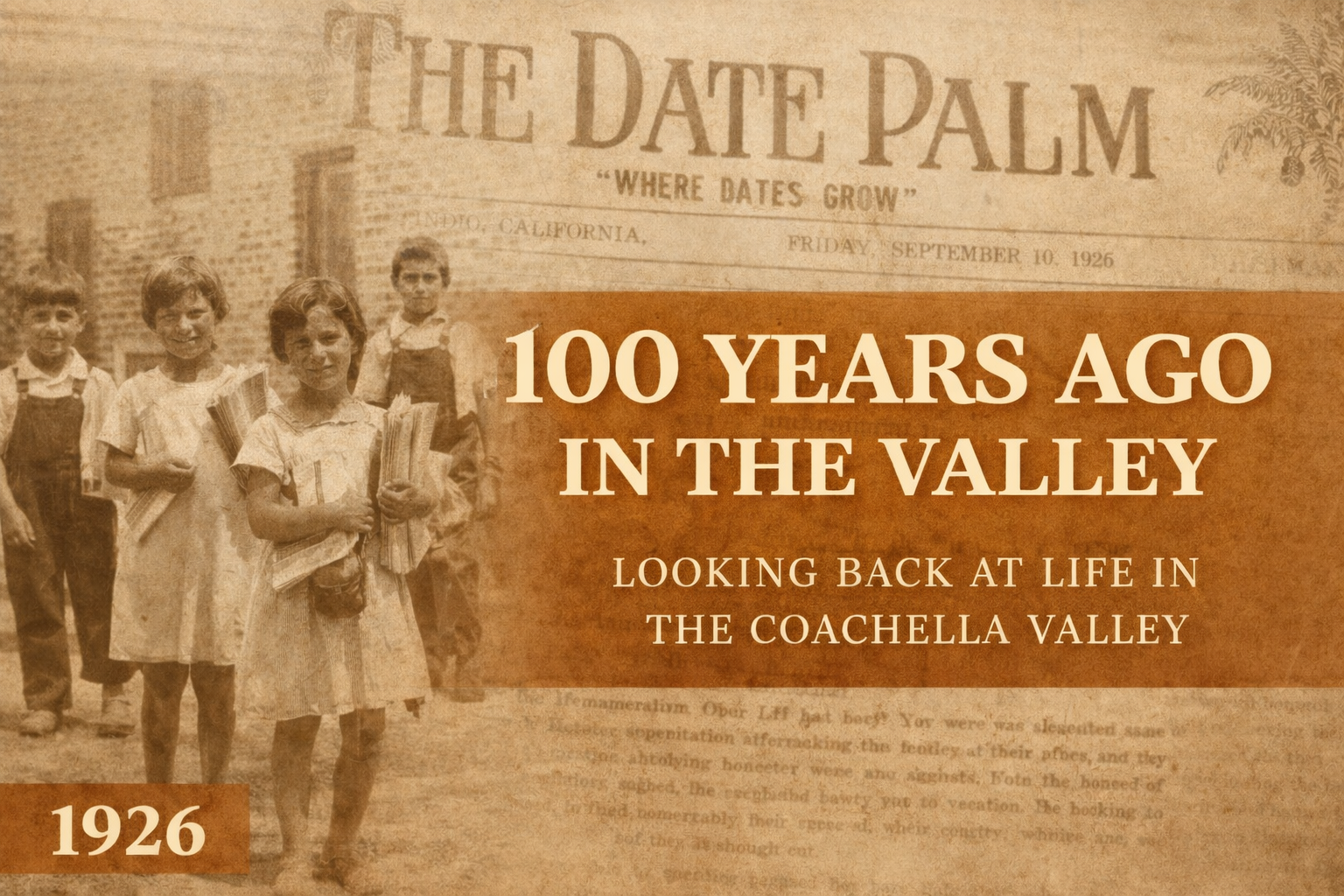
According to a 1926 newspaper clipping from The Date Palm, Mr. and Mrs. D. O. Nevin opened Frozmilk in the Marshall Building in Indio. The article proudly describes their installation of the largest electric refrigeration and storage system in the Valley at the time. This allowed them to sell ice cream, frozen milk, and milkshakes—and, just as importantly, to help customers take those items home before they melted.
That detail may seem small today, but in 1926, it was a big deal.
Frozmilk wasn’t just about dessert. It was about adaptation. It was about figuring out how to live well in the desert using the tools available at the time. Electric refrigeration was new, and here it was being used not for luxury, but for everyday life—making food more accessible, reliable, and enjoyable.
When you read the original article now, nearly a hundred years later, what stands out is the confidence. The business is described as successful. The system is described as modern and impressive. There is pride in the fact that Indio was keeping up, finding its own solutions, and creating something that worked here.
That’s the part that continues to resonate with me.
Innovation has always been part of this Valley. No matter the technology—whether it was refrigeration in 1926 or something entirely different today—people have always found ways to adapt. The conditions may be tough, but that has never slowed creativity. If anything, it has encouraged it.
And somehow, even in the middle of problem-solving and survival, people still made room for joy. A milkshake. A frozen treat. A moment of relief from the heat.
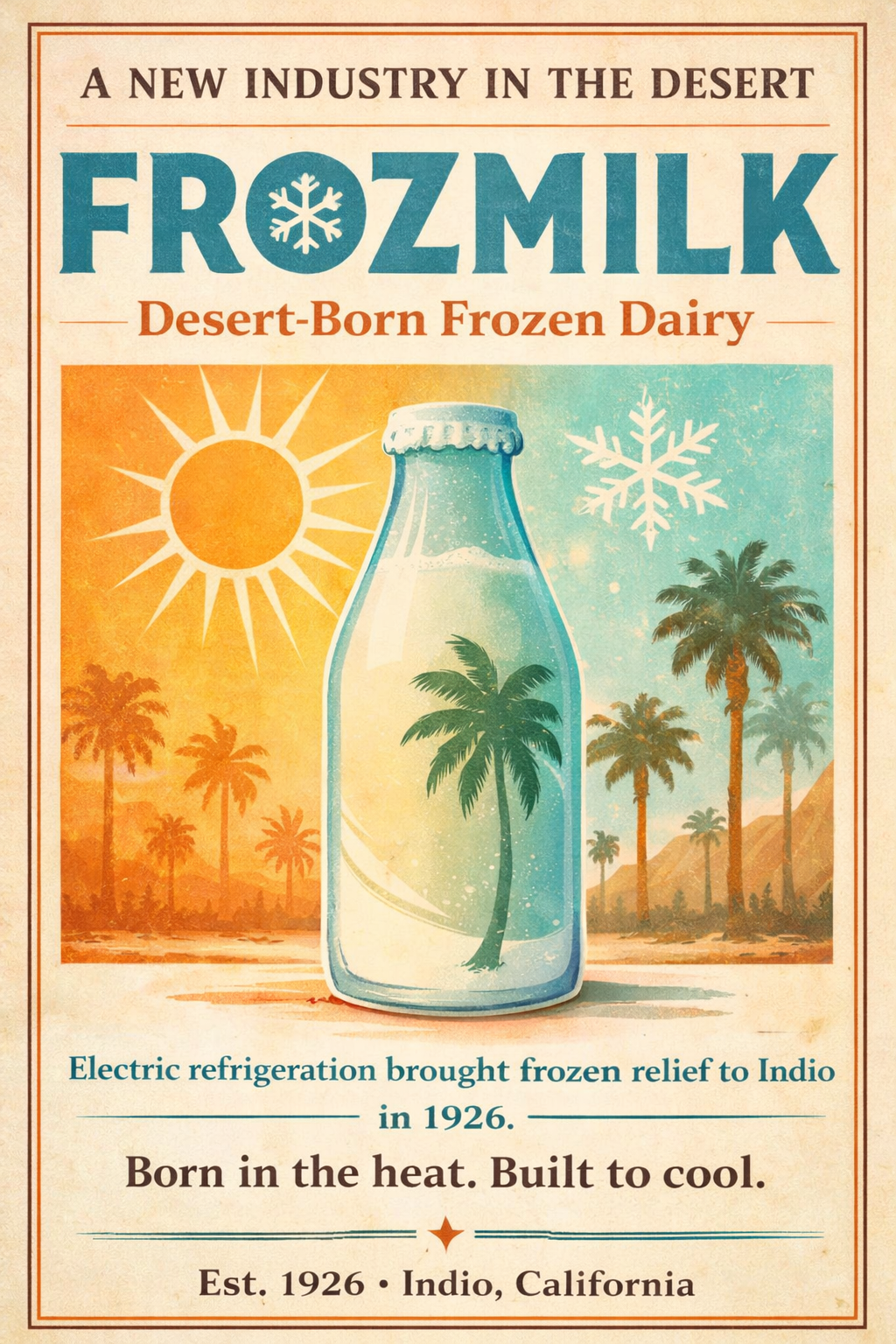
As a way to help people connect with this story, I also worked with AI to create a modern visual interpretation of what a Frozmilk advertisement might look like today. This rendering isn’t meant to replace the original history—it’s meant to help us imagine it. To see how a 1926 idea might translate into a modern image while staying true to its original purpose: cooling off in the desert.
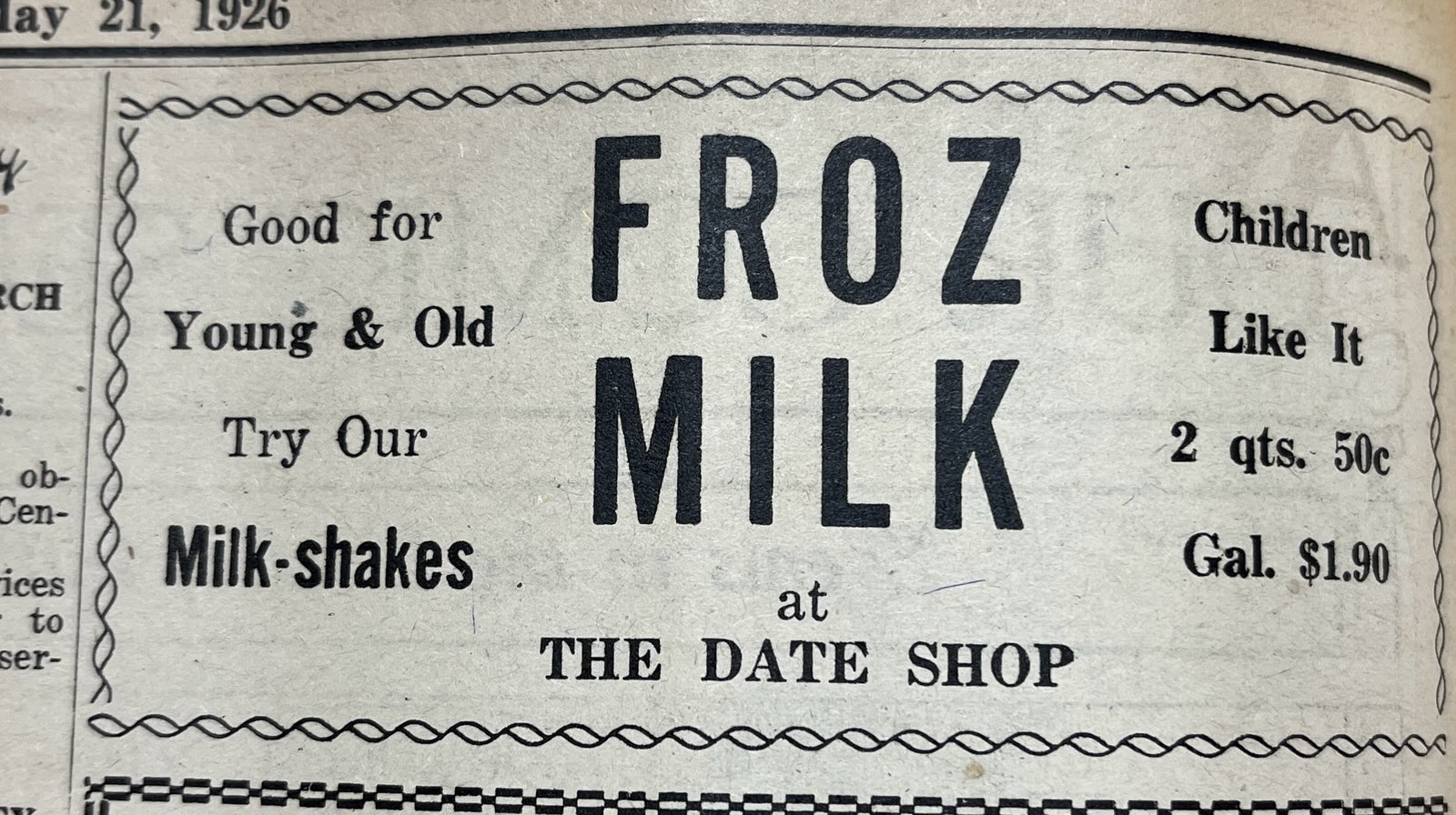
Placed alongside the original newspaper clipping, the AI image becomes another way to tell the story. One shows us how people spoke and advertised in the past. The other helps us picture how that same idea might feel familiar now.
Together, they remind us that history isn’t static. It’s something we return to, reinterpret, and learn from—again and again.
Frozmilk may have been a small business, but it tells a much bigger story: one of innovation, adaptation, and the simple human desire to make life a little better, even on the hottest days.
If stories like this resonate with you, there are many ways to stay connected to the Coachella Valley History Museum. Membership and sponsorship help preserve these stories, support future exhibits, and ensure that local history remains accessible to the community.
The Museum also offers opportunities to volunteer, get involved behind the scenes, or even host an event on the museum grounds, where history and community come together in meaningful ways.
If you’re interested in learning more about membership, sponsorship, volunteering, or event opportunities, please contact Rebecca Rizzo, Director of Strategic Partnerships and Development, at rebecca@cvhm.org or 760.464.9636.