It was simple. Direct. Practical.
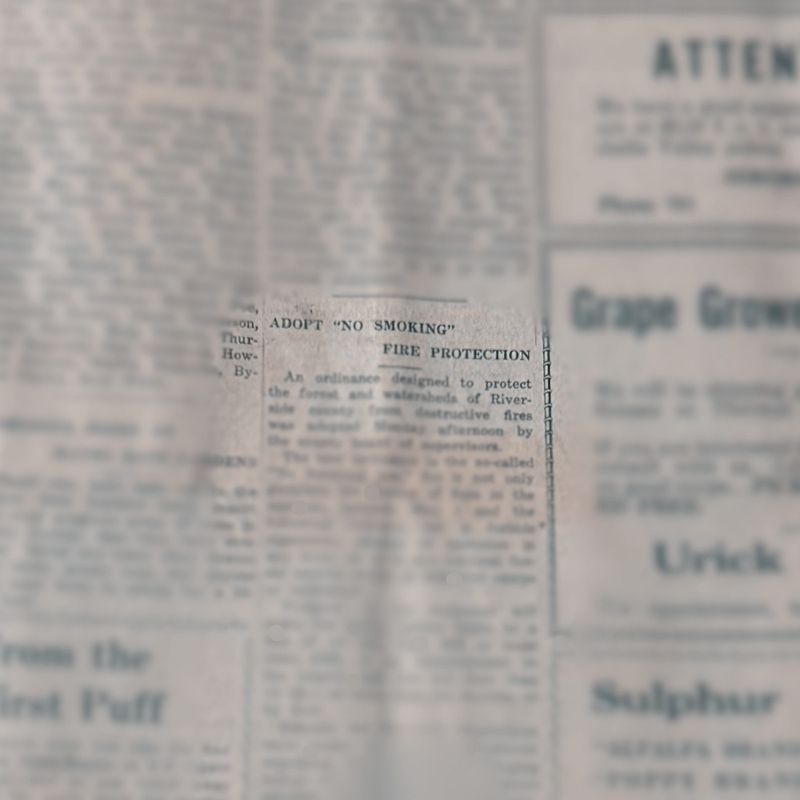
“Adopt ‘No Smoking’ — Fire Protection.”
But behind those few words was something much bigger—a quiet understanding of what it meant to live, work, and build a life in the desert.
At that time, the Coachella Valley was still finding its footing. Agriculture was growing. Rail lines were expanding. Businesses were beginning to take shape. There was momentum in the air… but there was also risk.
Because in a place like this, one spark could change everything.
The ordinance made it clear: no open fires in certain areas, no smoking in the brush, no careless use of flame where it didn’t belong. It wasn’t about restriction for the sake of control. It was about protection. About preserving what people were working so hard to build.
And when you look at the rest of the page, you start to see the full picture.
There are advertisements for grape growers preparing to ship their crops out of Thermal and Indio. There are products being sold to support the soil, to strengthen what’s being grown. There are signs of movement—of goods, of people, of possibility.
This was a community in motion.
But growth in the desert has never been passive. It requires awareness. Intention. Care.
What stands out most is not just the ordinance itself, but the mindset behind it. Leaders at the time understood that if the Valley was going to thrive, it had to be protected—not just from outside forces, but from everyday habits that could unintentionally cause harm.
Even something as small as a cigarette.
One hundred years later, that message still holds.
We live in the same landscape. We feel the same winds. We know how quickly conditions can shift. And while the tools may have changed, the responsibility has not.
We are still part of that same story.
Still caretakers of a place that asks us to be present, to be mindful, and to look out for one another.
That’s what makes pieces like this so powerful.
They remind us that history isn’t just about what happened—it’s about what was understood.
And in 1926, the people of the Coachella Valley understood something clearly:
If you want something to last…
you have to protect it.
Article by Rebecca Rizzo, Director of Strategic Partnerships & Development
If stories like this resonate with you, there are many ways to stay connected to the Coachella Valley History Museum. Membership and sponsorship help preserve these stories, support future exhibits, and ensure that local history remains accessible to the community.
The Museum also offers opportunities to volunteer, get involved behind the scenes, or even host an event on the museum grounds, where history and community come together in meaningful ways.
If you’re interested in learning more about membership, sponsorship, volunteering, or event opportunities, please contact Rebecca Rizzo, Director of Strategic Partnerships and Development, at rebecca@cvhm.org or 760.464.9636.
Follow us:
Instagram: https://www.instagram.com/cv_history_museum
Facebook: https://www.facebook.com/CoachellaValleyHistoryMuseum